


How often do you check the label on the bottom of your dog’s bag of kibble? What about the tag on the bag of steer feed for your child’s 4-H livestock animal? While pet food and animal feed labels seem trivial, they're backed by decades of history and strict legal requirements.
 In 1896, Massachusetts became the first state to enact legislation regulating animal feed. Many states followed, and within twenty-five years, a majority of the country had some sort of regulation in place to oversee the sale of animal feed. These regulations keep farmers, pet owners and livestock safe. As the American Feed Industry Association describes it, “these first feed laws were ‘truth-in-labeling’ laws, meant to protect farmers.”
On a federal level, Congress passed the Pure Food and Drug Act in 1906, establishing the U.S. Food and Drug Administration (FDA) and prohibiting the sale of adulterated and mislabeled food. This was followed in 1938 by the Federal Food, Drug and Cosmetic Act, which gave the FDA the authority to regulate food, including both livestock feed and food for humans. A couple of decades later, in 1966, the Fair Packaging and Labeling Act was passed. This law set standards for both food and feed labels, from guaranteed analysis and nutrition accuracy to weight and quantity regulations.
Food and feed regulations like these form the framework for the animal feed industry, shaping the current landscape where IFA and other companies operate. Animal feed labels are crucial for customer communication and one of the most important tools feed companies have to inform customers what they are receiving. Understanding what these labels tell you (and what they don't) is essential.
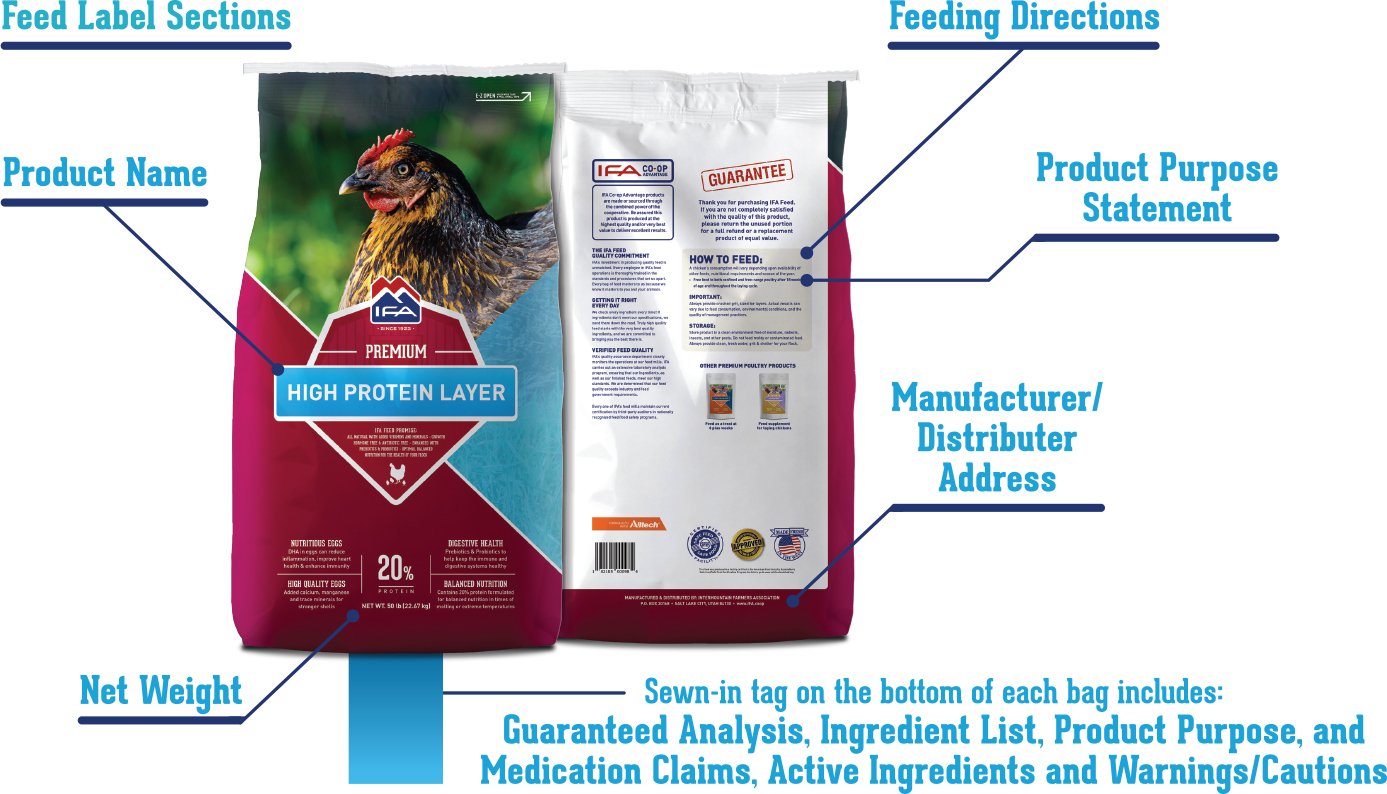
Each Label Contains the Following Sections:
Product Name
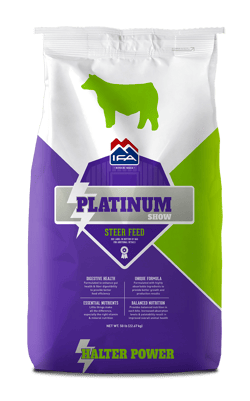 The product name describes the feed, letting the customer know who and what the feed is made for.
Some companies may include their brand name in the name, but it will also tell the customer what the feed is. For example, IFA’s Platinum Halter Power Steer Feed includes the brand name (IFA), the product line (Platinum Halter Power) and the type of feed (Steer Feed).
Additionally, the name may also include the form the feed comes in. Common feed forms are pellets, mash, crumbles and texturized (molassified). Each has its own use case, whether for different animal classes or various applications. While this descriptor is not required to be on the label, it is often included to help customers choose the best feed for their needs.
Product Purpose Statement
This section describes the animal species and class the feed is designed for. It is often more descriptive than the name, helping customers narrow down selections. For example, the product purpose Statement may say “Complete feed for laying hens” or “For calves approximately 3 days to 3 months of age,” specifying the kind of animal and other identifying characteristics. Because different classes and ages of animals require different nutrients, this section helps customers decide which product to buy.
Medication Claim
Feed labels are required to disclose if a product includes medication. The word ‘Medicated’ will either appear in the purpose statement or as a separate line. This medication statement is taken from the FDA’s “indication for use” and will be related to the animal species and the product’s intended usage.
Active ingredient(s)
Active ingredients are additives that are guaranteed at a certain level and have been FDA approved as safe for the indicated animal species. This section includes the generic name and dosage level (expressed in milligrams per pound or grams per ton of feed). If the product has no additives, this section won’t be present.
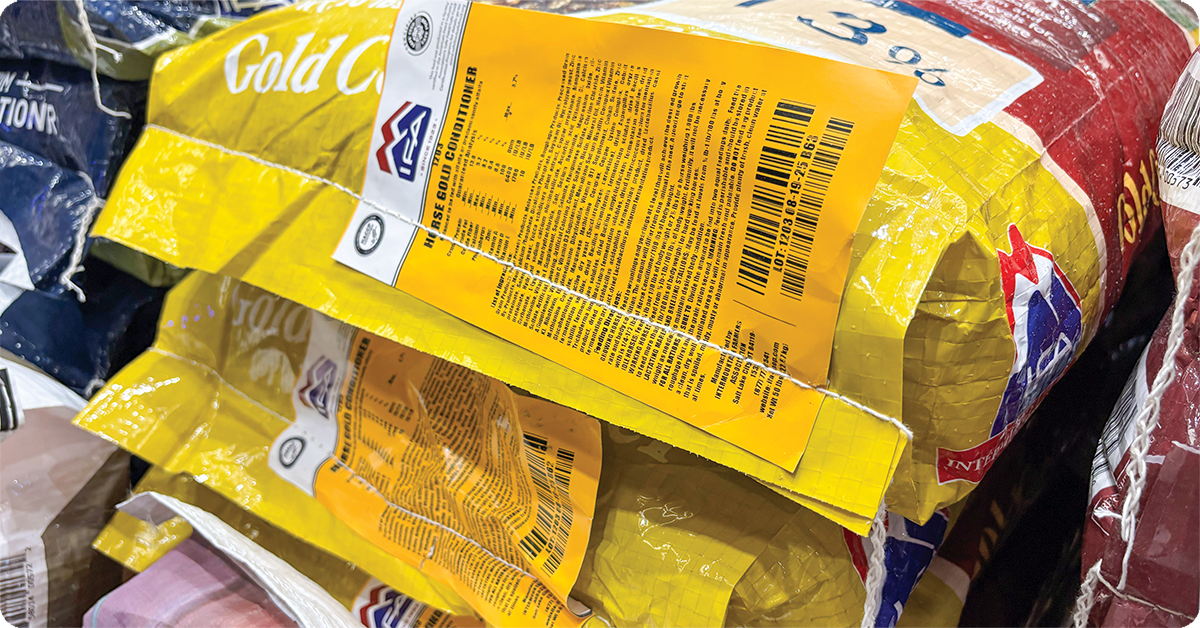
Guaranteed Analysis
This section lists the nutrient levels present within the animal feed. Depending on the species and class of an animal, the guaranteed analysis will include different nutrients. For instance, poultry and swine feeds require that Lysine (an essential amino acid) be listed, while beef and dairy feeds do not. Some nutrients will be listed as a range; for example, calcium has a minimum and maximum level on labels. This assures the customer that the feed is not filled with a low-cost ingredient like calcium carbonate or salt.
Some companies may choose to guarantee additional nutrients beyond regulatory requirements, highlighting additional value for the consumer. Keep in mind, there are many nutritional aspects of a particular feed that are not always reflected in the guarantees.
Ingredient List
The ingredients section is straightforward. Ingredients are listed under their most generic name, and trade names are not allowed in this section; however, “collective terms” may be used. These are groupings of ingredients that have a similar function within a diet, like a protein or energy source. For example, corn, barley and oats all fall under “Grain Products,” and soybean meal and canola meal fall under “Plant Protein Products”.
The ingredient list reveals the source of the nutrients from the guaranteed analysis. For example, zinc might be guaranteed at 1500 ppm, but knowing whether it comes from zinc sulfate or zinc methionine matters, as different nutrient sources offer different benefits.
Many feeds nowadays will also contain different yeasts or Direct-Fed Microorganisms. These have various nutritional uses, but for the sake of the label, they are required to be listed by their Latin names. Examples include Aspergillus oryzae and Saccharomyces cerevisiae, which can be hard to pronounce, but aren’t harmful.
Feeding Directions
These directions range from simple–“feed free-choice to turkeys from 17 weeks of age until desired market weight”–to complex formulas requiring math based on the animal's body weight. Either way, the directions should provide the customer enough information to feed the product correctly. Following these directions ensures optimal animal performance.
Warnings and Cautions
Some animals are sensitive to certain nutrients or ingredients, making these warnings critical for preventing any feed-related issues. For example, feeds with added copper can be toxic to sheep. Additionally, medications may also require withdrawal periods or have specific use conditions. Paying attention to these warnings helps prevent costly health issues and ensures compliance with safety regulations.
Manufacturer/Distributer Address
Feeds are required to list the party responsible for the product. This can either be the manufacturer or, if distributed by a different company, that address may be listed instead.
Net Weight/Quantity Statement
All products need to display their weight in both imperial and metric units.
Understanding IFA Feeds
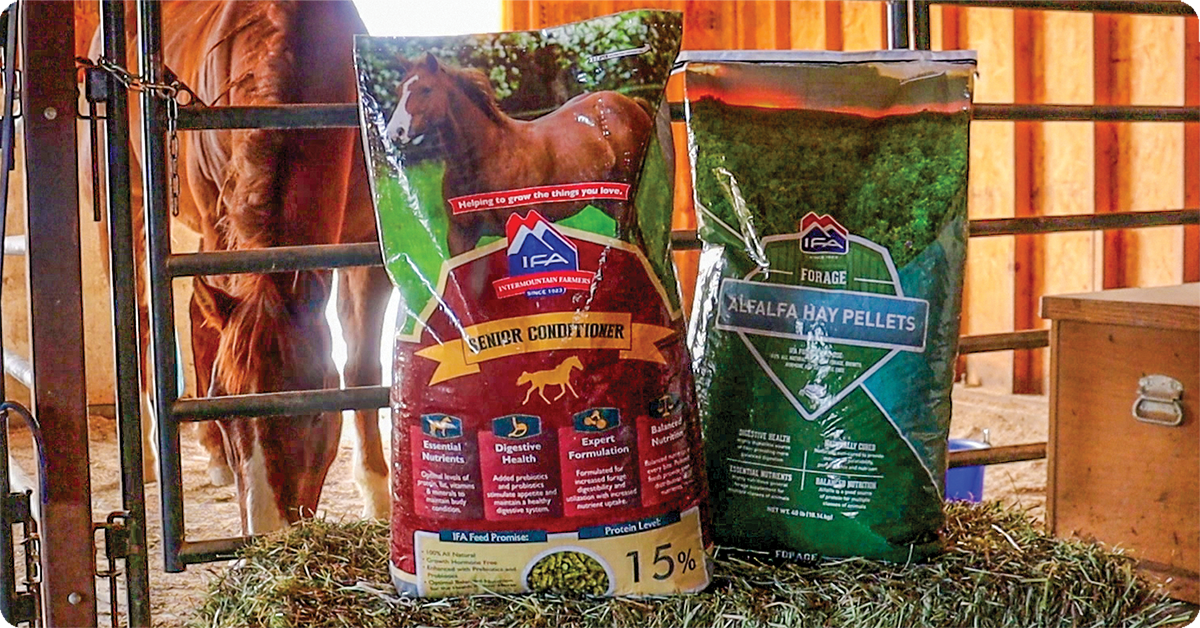
Although the tag on a bag of feed might be easy to overlook, it contains critical information, from intended animal species to feeding directions. It’s how feed companies communicate with consumers.
However, these labels can’t answer every question. For more information about your feed, contact IFA's Feed and Nutrition experts or visit your local IFA Country Store.

Written by Jeffrey Briscoe, Technical Sales Assistant and Feed Sales Consultant, and originally published in the IFA Cooperator magazine (vol. 91, no. 4) Winter 2025.
Jeffrey Briscoe helps intermountain producers as a technical sales assistant with IFA Feed and Nutrition. Jeffrey brings extensive livestock experience from growing up on a small Oregon farm and helping with his grandfather’s cattle. He earned his degree in animal, dairy and veterinary science with an emphasis in animal production from Utah State University. Jeffrey works closely with IFA’s nutritionists to provide on-farm services and assist with quality control at IFA’s North Region Feed Mill. He enjoys getting out in the field and working with producers, but can also be found enjoying the great outdoors with his wife —though don’t be confused if you think you spot him twice; he has a twin!