


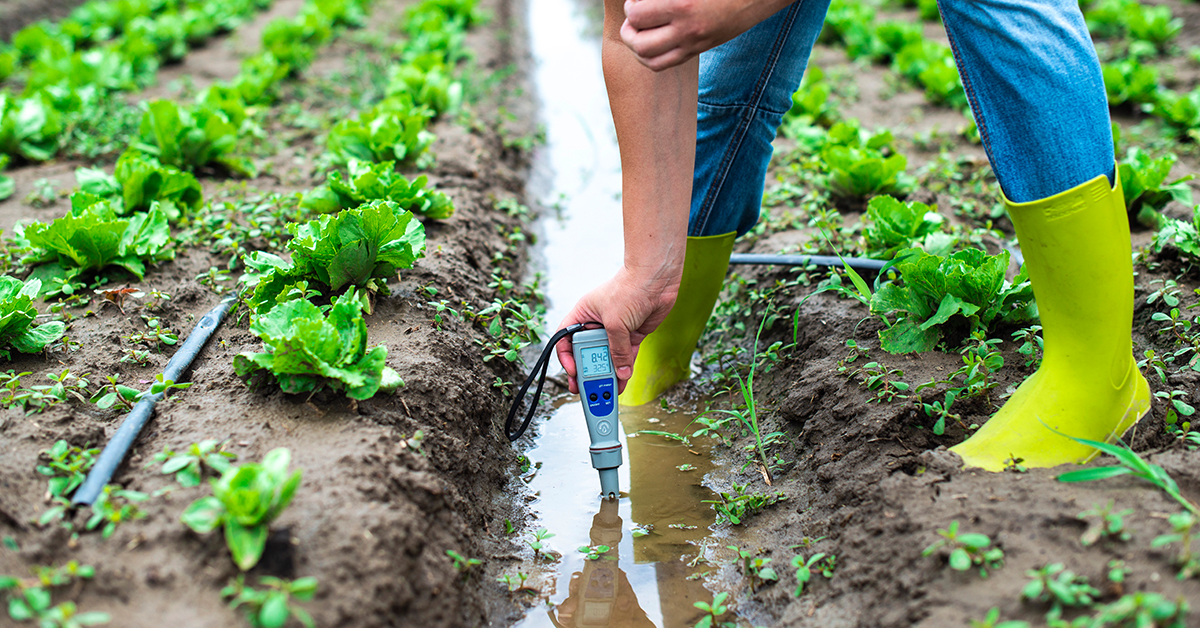
All growers know the importance of soil testing, but not all know the true benefits of testing their irrigation water. Irrigation water can carry contaminants, affecting the soil’s pH and chemical makeup and, therefore, its nutrient availability.
Why Test Irrigation Water?
Water contamination testing and pH testing are crucial for maintaining crop health, increasing nutrient availability, and maximizing ROI. The best yields come from well-cared-for soil, starting with the irrigation water, which contains minerals and compounds. These elements affect soil health, plant growth, and nutrient uptake. More importantly, the quality of irrigation water can vary greatly throughout the growing season, making it crucial to test regularly. Consider the following:
Soil Quality
The quality of irrigation water affects crops’ soil, reducing nutritional value, limiting yields and stunting growth. Salinity and mineral content are common issues. Water with high dissolved salts or improper pH alters soil structure and fertility over time.
Soil Contamination
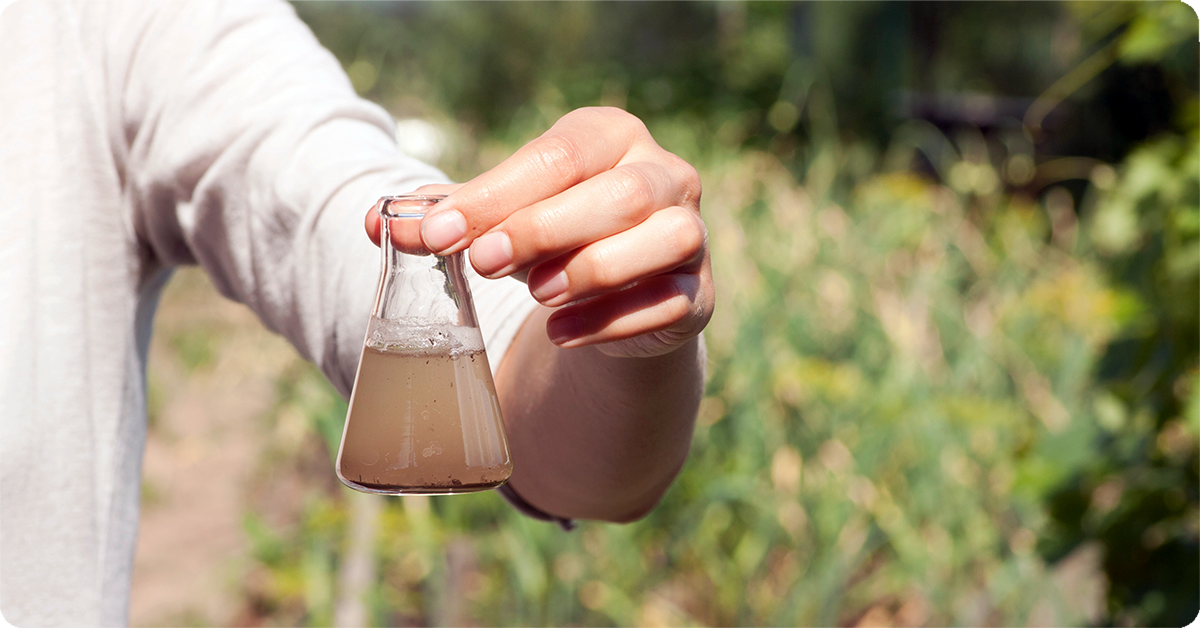
Contaminants can be present in some irrigation water, often due to upstream industrial, mineral and groundwater sources. This particulate can accumulate in soils, decreasing nutritional quality and soil productivity.
Alkaline pH Levels
High pH water can cause micronutrients such as Iron (Fe), Zinc (Zn), and manganese (Mn) to become unavailable – even if they’re present in the soil. Bicarbonates in this water can tie up Calcium and Magnesium.
Instability
Whether acidic or basic, extreme pH levels can cause fertilizers to react poorly or "fall out" of the solution before they even reach the plant.
Sodium (Na)
High Na levels can destroy soil structure (dispersion) and break down aggregates, leading to poor water infiltration and drainage. It also physically crowds out Calcium (Ca) and Potassium (K) at the root site. Accumulation in root zones leads to osmotic stress and reduced water uptake.
Bicarbonates
High levels of HCO3 can cause precipitation of Ca and Mg out of solution, reducing flocculation, soil crusting and reducing infiltration.
High Salinity
Excess salt in irrigation water can lead to buildup in the root zones, creating osmotic stress. EC helps identify seasonal changes in water quality throughout the growing season.
High TDS
Consistent, long-term use of high-TDS water destroys soil structure, reduces microbial activity and impairs water infiltration. High TDS water also contains Cl and HCO3, which interfere with the uptake of key nutrients such as K, Ca, and Mg.
The Beginning of the Season
Establish a baseline for mineral, nutrient, and contaminant levels by testing at the beginning of the growing season.
Throughout the Growing Season
Water sources can be affected by changes in river flow or seasonal groundwater levels. Mid-season checks detect changes in water quality that might affect crop growth and nutrient uptake.
After Major Weather Events
Heavy rains, droughts, and other climate events can change water salinity, pH, and contaminant levels, which affect crop health.
Quarterly
If you draw from variable sources like surface water, wells, or municipal supplies. Regular check-ins help you catch quality shifts before they become a problem.
Monthly or bimonthly
If your region has known water quality challenges, like high salinity or contamination, for the closest possible eye on things.

What to Test For
Water pH, mineral content and salinity are common yet serious factors affecting soil viability by tying up or competing with critical nutrients like magnesium, calcium and potassium. Unlike other nutrients, Calcium (CA) is relatively immobile in plant tissues, requiring a continuous supply from the soil. Irrigation water testing will ensure that micro-nutrients that impact nutrient availability are not present. This is crucial for plant viability. The following should be tested throughout the growing season.
Water pH
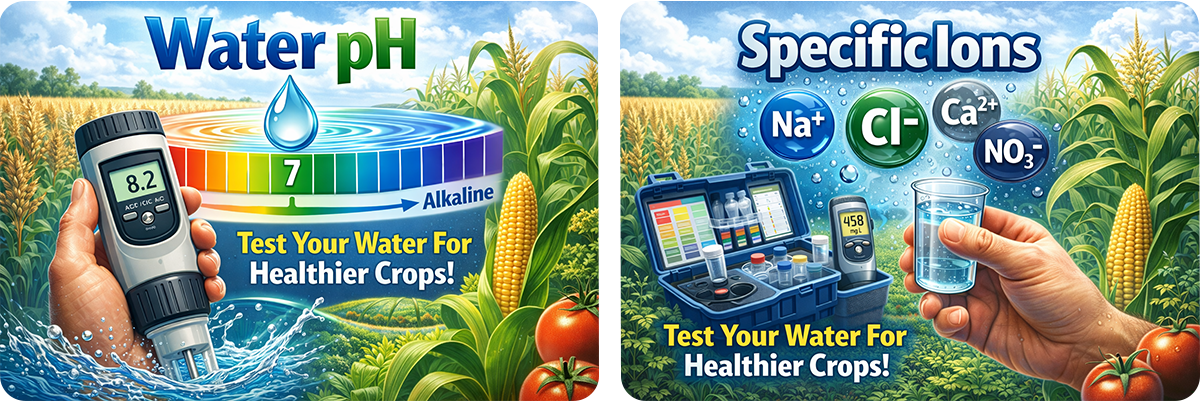
pH has a huge impact on nutrient uptake and availability. Water that’s too acidic (low pH) or alkaline (high pH) can make essential nutrients less available to plants.
Specific Ions
These include sodium (Na), Chloride (Cl), Bicarbonate (HCO3), and Carbonates (CO3) impact soil structure, nutrient availability, and water infiltration.
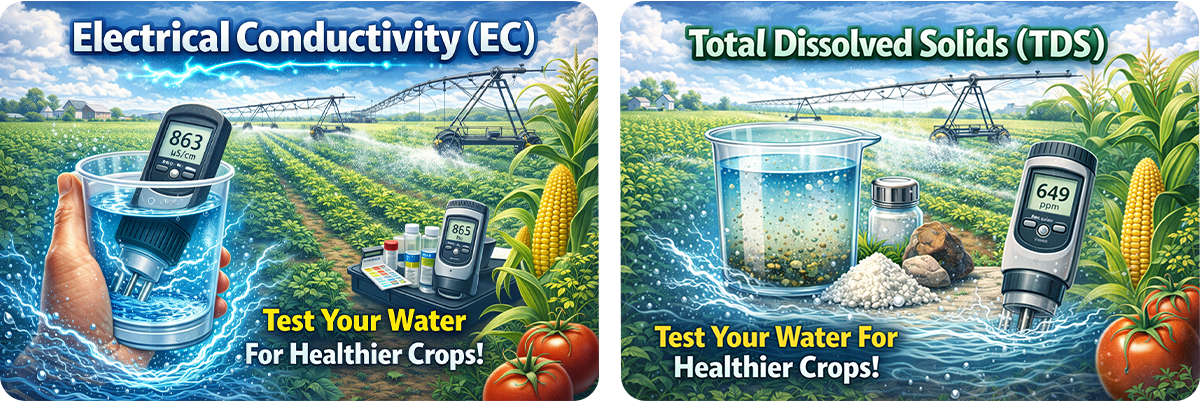
Electrical Conductivity (EC) and Total Dissolved Solids (TDS)
Electrical Conductivity (EC) and Total Dissolved Solids (TDS) measure salinity, which affects plants’ water uptake.
When to Test?
The Beginning of the Season
Establish a baseline for mineral, nutrient, and contaminant levels by testing at the beginning of the growing season.
Throughout the Growing Season
Water sources can be affected by changes in river flow or seasonal groundwater levels. Mid-season checks detect changes in water quality that might affect crop growth and nutrient uptake.
After Major Weather Events
Heavy rains, droughts, and other climate events can change water salinity, pH, and contaminant levels, which affect crop health.
How Often to Test?
Testing frequency depends on the likelihood of irrigation contamination, but a good rule of thumb is to always test at the start and end of every growing season. This gives you a reliable baseline and helps you spot any long-term trends.
From there, how often you test comes down to your specific situation:
Quarterly
If you draw from variable sources like surface water, wells, or municipal supplies. Regular check-ins help you catch quality shifts before they become a problem.
Monthly or bimonthly
If your region has known water quality challenges, like high salinity or contamination, for the closest possible eye on things.
For more information, contact our local IFA agronomy expert or CCA.

Written by Tom Tankersley, Diamond K Gypsum, and originally published in the IFA Cooperator magazine (vol. 92, no. 2) Summer 2026.
Tom Tankersley is a seasoned agricultural professional and the current Sales and Territory Manager for Diamond K Gypsum in Idaho. After studying at Cal Poly, San Luis Obispo, Tom transitioned from his family’s hardware business to vineyard management, where he oversaw 2,300 acres of grapes. His career led him to Idaho in 1990, where he held pivotal management and advisory roles at J.C. Watson Company, Wilbur-Ellis, and Helena Chemical. Since joining Diamond K Gypsum in 2018, Tom has leveraged his extensive field experience to drive regional success, calling it the most rewarding chapter of his career.